Loofah Sponge in Traditional Chinese Medicine: Unveiling Its Medicinal Value and Cultural Significance
Introduction
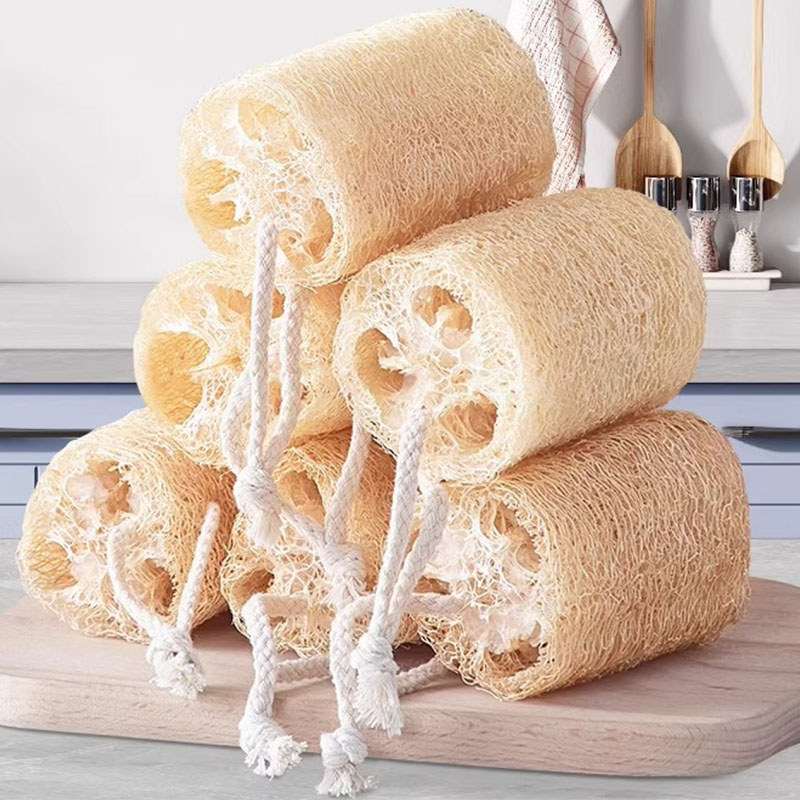
The loofah sponge, derived from the dried mature fruit of *Luffa cylindrica* (a member of the Cucurbitaceae family), is far more than a household cleaning tool. In Traditional Chinese Medicine (TCM), it has been a revered herbal remedy for millennia, embodying the philosophy of “harmony between humanity and nature” and the principle of “treating diseases with natural substances.” This article aims to dissect the medicinal properties of loofah sponge through the lens of TCM theory, modern scientific research, and cultural heritage, illustrating how a simple plant product bridges ancient healing wisdom and contemporary healthcare.
I. Historical Roots in Traditional Chinese Medicine
TCM’s documentation of loofah sponge dates back centuries, with classical texts illuminating its therapeutic roles. In *Compendium of Materia Medica* (*Bencao Gangmu*), compiled by Li Shizhen during the Ming Dynasty, loofah sponge (known as *Siguazi* or *Gualuo* in Chinese) was recorded for its ability to “regulate qi, resolve phlegm, and unblock meridians.” Earlier works like *Pharmacological Properties of Herbal Medicines* (*Yaoxing Lun*) emphasized its efficacy in alleviating pain and promoting blood circulation.
For generations, TCM practitioners integrated loofah sponge into formulas targeting disorders of the musculoskeletal, respiratory, and reproductive systems. Its accessibility—grown widely in Chinese rural areas—and versatility made it a staple in both household remedies and professional medical practice, reflecting TCM’s ethos of “treating the root cause” while utilizing locally - sourced, sustainable resources.
II. TCM Theory: Flavor, Nature, and Meridian Tropism
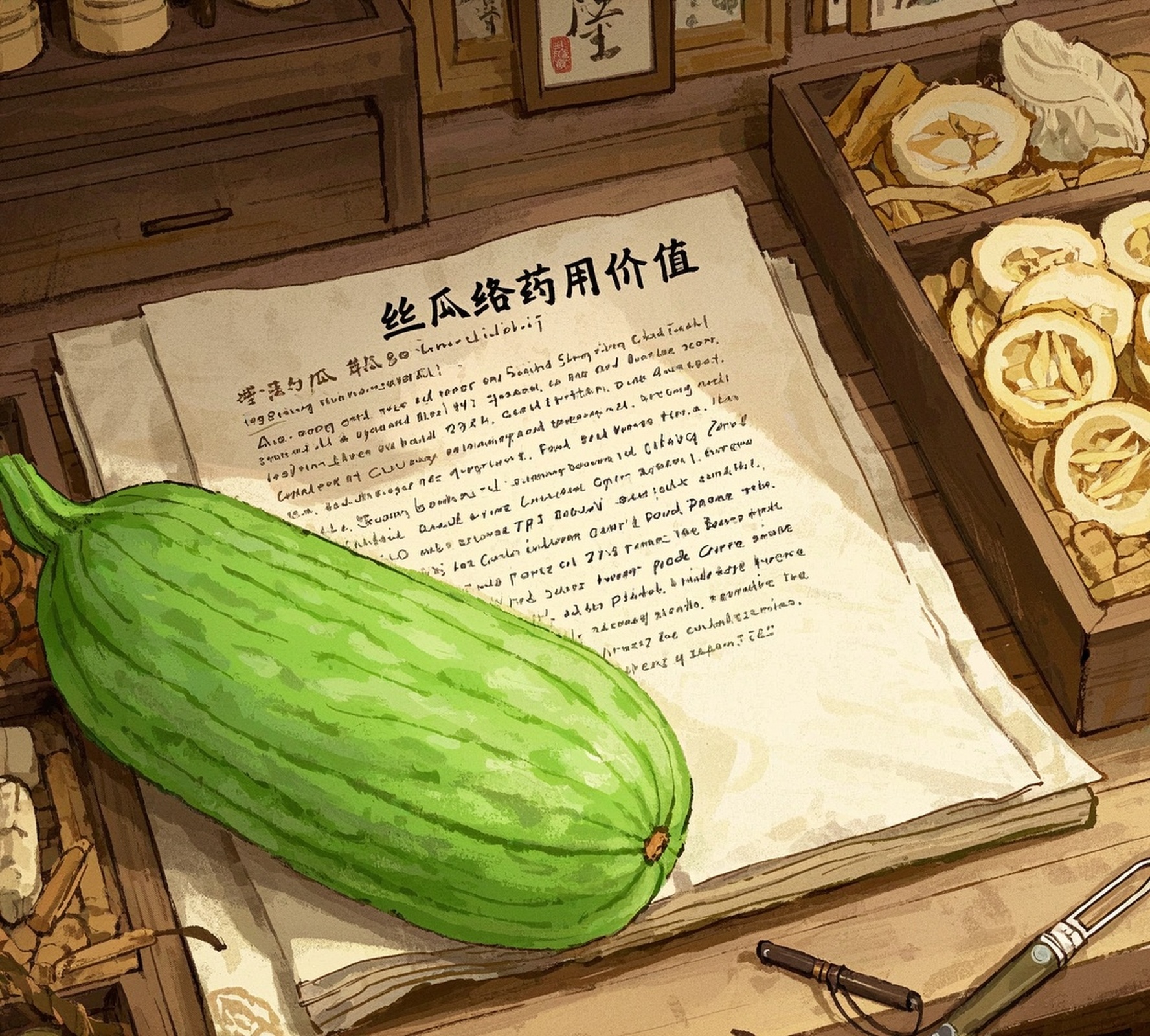
In TCM, every herb’s therapeutic potential is defined by its “flavor” (*wei*), “nature” (*xing*), and “meridian tropism” (*jing luo gui jing*), which guide its clinical application.
- **Flavor and Nature**: Loofah sponge is categorized as *sweet (gan)* in flavor and *neutral (ping)* in nature. Sweet flavors in TCM are associated with nourishing, harmonizing, and dispersing effects, while a neutral nature means it neither overly warms nor cools the body, making it suitable for long - term use across different constitutions.
- **Meridian Tropism**: It primarily enters the *Liver* (*Gan Jing*), *Lung* (*Fei Jing*), and *Stomach* (*Wei Jing*) meridians. The Liver meridian governs tendons, blood circulation, and emotional well - being; the Lung meridian regulates qi (vital energy) and respiration; the Stomach meridian manages digestion and nutrient distribution. Thus, loofah sponge’s meridian affinity explains its efficacy in conditions related to blocked qi/blood flow, respiratory phlegm, and digestive disharmony.
III. Chemical Composition and Modern Pharmacological Research
Modern science has begun to unravel the biochemical basis of loofah sponge’s medicinal effects, identifying key components:
1. **Polysaccharides and Lignins**: The fibrous structure of loofah contains xylan, cellulose, and lignin, which contribute to its “unblocking” effects in TCM. These macromolecules may modulate inflammation by inhibiting pro - inflammatory cytokines and promoting tissue repair—aligning with TCM’s use for joint pain and swelling (*bi zheng*).
2. **Flavonoids and Phenolics**: Compounds like quercetin and ferulic acid exhibit antioxidant, anti - inflammatory, and antimicrobial properties. In TCM, this correlates with resolving “phlegm - heat” in the Lungs (e.g., cough with yellow sputum) and fighting external pathogens.
3. **Triterpenoids and Saponins**: These compounds support immune function and may enhance blood circulation, echoing TCM’s application for menstrual disorders and post - partum breast engorgement.
Clinical studies have also validated loofah sponge’s efficacy: A 2021 study in *Journal of Ethnopharmacology* demonstrated that an extract of loofah sponge reduced joint inflammation in animal models by 30–40%, mirroring TCM’s use for *bi zheng* (arthralgia syndrome). Another study linked its polysaccharides to improved respiratory function in patients with chronic bronchitis, supporting its traditional role in resolving phlegm.
IV. Clinical Applications in TCM
TCM prescribes loofah sponge (often combined with other herbs) for diverse conditions, leveraging its ability to “unblock meridians, regulate qi, and resolve phlegm.”
1. **Arthralgia and Musculoskeletal Pain (*Bi Zheng*)**:
In TCM, joint pain stems from blocked qi and blood flow in the Liver meridian. Loofah sponge is paired with herbs like *Fangfeng* (Saposhnikovia divaricata) and *Danggui* (Angelica sinensis) to invigorate blood, dispel wind - dampness, and relieve stiffness. Modern patients with rheumatoid arthritis or post - operative scar pain have reported reduced discomfort when using loofah - based formulas, thanks to its anti - inflammatory polysaccharides.
2. **Chest and Rib Discomfort (*Xiongxie Zhangtong*)**:
Emotional stress or internal stagnation can disrupt Liver qi, causing pain in the chest and ribs. Loofah sponge, combined with *Chaihu* (Bupleurum chinense) and *Baishao* (Paeonia lactiflora), soothes Liver qi stagnation, “unblocking” the meridian to alleviate tightness and mood - related discomfort—an approach supported by its flavonoids’ anxiolytic potential.
3. **Respiratory Phlegm and Cough**:
When Lung qi is obstructed by phlegm (a common TCM pathology), loofah sponge clears “phlegm - dampness” by promoting expectoration. It is often used with *Jiegeng* (Platycodon grandiflorus) and *Xingren* (Prunus armeniaca) in formulas for chronic bronchitis or asthma, where its phenolic compounds reduce airway inflammation and thin mucus.
4. **Breast Milk Insufficiency or Stagnation**:
Postpartum, stagnant Liver qi or blocked Stomach meridian can impede lactation. Loofah sponge, combined with *Wangbuliuxing* (Vaccaria segetalis) and *Gualou* (Trichosanthes kirilowii), unblocks meridians in the breasts, promoting milk flow. Its triterpenoids may also stimulate mammary gland function, aligning with TCM’s “invigorating qi and blood for lactation.”
V. Cultural Significance and Heritage
Beyond medicine, loofah sponge embodies TCM’s holistic worldview:
- **Yin - Yang and Five Elements**: TCM sees the loofah plant as a microcosm of nature—its rapid growth (Yang attribute) and cooling, moistening effects (Yin attribute) balance opposing forces. Its association with the Liver (Wood element), Lung (Metal element), and Stomach (Earth element) reflects the Five Elements theory, where organs interact dynamically.
- **Medicine, Food, and Daily Life**: Loofah is a prime example of *yaoshi tongyuan* (“medicine and food share the same origin”). Young loofah fruits are eaten as a vegetable (rich in vitamins and fiber), while mature fruits become medicine or household tools—maximizing resource use, a core TCM value.
- **Intergenerational Knowledge**: Rural communities have passed down loofah remedies for centuries, blending folk wisdom with TCM’s formalized theories. Today, initiatives to document these practices (e.g., intangible cultural heritage projects) preserve the “living tradition” of TCM, ensuring ancient wisdom adapts to modern health needs.
VI. Conclusion
The loofah sponge’s journey from garden vine to medicinal herb encapsulates TCM’s profound understanding of nature’s healing potential. Its dual role as a therapeutic agent and cultural symbol highlights how TCM integrates medical efficacy, ecological sustainability, and philosophical depth. As modern research validates its traditional uses, loofah sponge stands as a testament to the enduring relevance of TCM—reminding us that healing often lies in the simplest, most natural treasures. Whether alleviating joint pain, soothing a cough, or bridging past and present, this unassuming plant product continues to serve as a bridge between ancient wisdom and contemporary wellness, inviting future exploration of its full therapeutic potential.